
The loonie just slipped to its weakest level since April 2025, with one US dollar buying 1.4249 Canadian dollars as of October 4, 2026. That sounds like a number for currency traders, but it quietly raises what you pay for groceries, gas, and getaways.
Exporters, on the other hand, are getting a nice boost, since every US-dollar sale turns into more Canadian cash back home. Click through the gallery to see who’s winning, who’s paying, and how the cheap loonie is reshaping your budget this year.
The loonie by the numbers
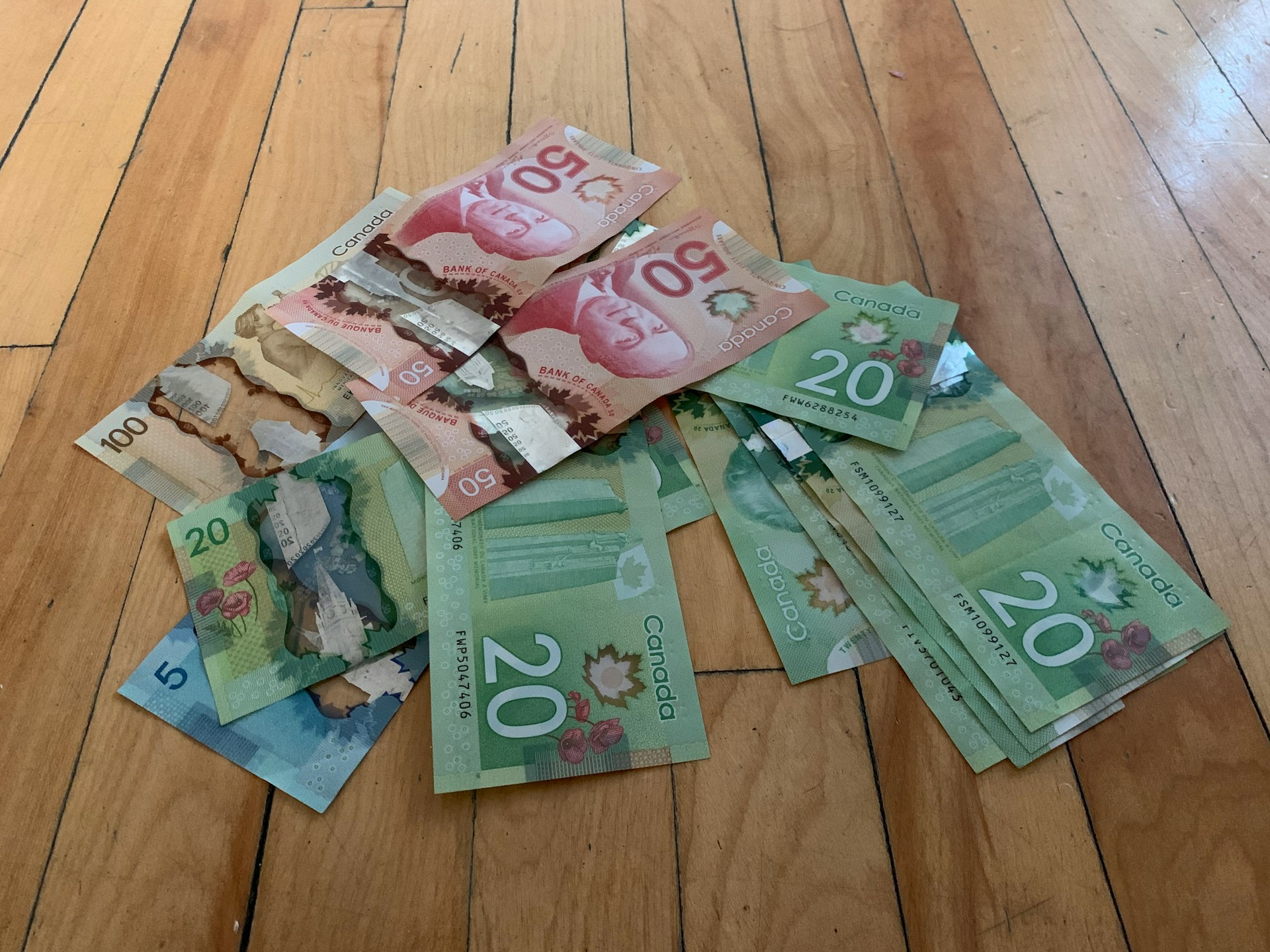
On October 3, one Canadian dollar was worth just 0.7017 US dollars, its lowest point in six months. That’s a noticeable drop from May 1, when the loonie reached about 73.6 US cents, its best showing of the spring. The slide has also sped up lately, since the loonie lost about 3.3% against the US dollar over the past month alone. Small percentage moves add up quickly when Canada exported $76.1 billion worth of goods in July alone.
What’s dragging it down

Several forces are working against the loonie together, including higher US interest rates, a weaker growth outlook from the Bank of Canada, new trade tensions and falling oil prices. Investors move money to where it earns more, so when US rates stay higher than Canadian rates, cash flows south, and the loonie loses value. Job numbers added to the pressure in September, as Canada lost almost 42,000 jobs in August while the US added 162,000. When one economy looks stronger than its neighbour, its currency usually wins the tug-of-war.
Exporters get a built-in raise
When a Canadian lumber mill sells US$1 million of wood to an American builder, it gets paid in US dollars and then converts that money back into loonies. At today’s rate of about 1.42, that sale turns into roughly C$1.42 million, compared with about C$1.36 million at the stronger rate in May. That’s around $60,000 in extra revenue for doing exactly the same work. Exporters can use that cushion to cover higher wages, buy new equipment or simply protect their thin profit margins.
A cushion against tariffs

Trade got tougher this summer when 50% US tariffs took effect on August 22, covering about US$20 billion in Canadian exports, or roughly 5% of everything Canada sells to the US. A tariff makes Canadian products more expensive for American buyers, which can push them toward other suppliers. A cheaper loonie pushes in the opposite direction by lowering the US-dollar price of Canadian goods. It can’t erase a 50% tariff, but it helps some Canadian sellers stay competitive and keep their customers.
Farmers get a lift

Canadian crops are finding eager buyers overseas, as canola exports jumped 43.2% in July, mostly because of bigger shipments to China, Pakistan and Japan. Grains and oilseeds trade around the world in US dollars, so a weaker loonie means farmers pocket more Canadian dollars for every tonne they sell. That extra money helps pay for seed, fuel and repairs on expensive machinery. The catch is that many of those farm supplies are also priced in US dollars, so farmers feel both sides of the coin.
Factories and aerospace

Manufacturing had a standout moment when exports of aircraft and other transportation equipment surged 34.9% in July. Planes, parts and machinery compete in a global market, and a cheap loonie makes Canadian-built products more attractive on price. Manufacturers with Canadian payrolls and US-dollar sales get the best of both worlds. Their wage bills stay the same in loonies, while their revenue grows every time they convert it back home.
Tourism’s quiet win

American visitors keep coming north, with US residents crossing into Canada 2.4% more often in August than a year earlier, marking seven straight months of growth. Overseas travellers are showing up too, since overseas visitors to Canada rose 7.2% in August. With one US dollar now worth about $1.42 here, American tourists get roughly 42% more spending power on hotels, meals and ski passes. That’s a welcome boost for tourist towns in Banff, Niagara Falls and Quebec City heading into the winter season.
Service exporters cash in

Canada sells more than just physical goods, and monthly service exports rose 1.2% to $21.0 billion in July. Software companies, engineering firms, film studios and call centres often bill their US clients in US dollars. A weak loonie makes Canadian talent cheaper to hire than American talent with the same skills. That helps explain why Hollywood productions and US tech firms keep sending work to cities like Vancouver, Toronto and Montreal.
The checkout tax

Grocery inflation has finally cooled, but the damage is already done, since food prices at stores rose 2.8% in August yet are still up 29% compared with August 2021. Canada imports a lot of its fresh fruit and vegetables, especially in winter, and most of those are bought in US dollars. When the loonie drops, grocers pay more for California strawberries and Arizona lettuce, and that cost eventually lands on the shelf tag. It never appears as a separate line on your receipt, which is exactly why economists call it a quiet tax.
Pain at the pump

Drivers have felt the squeeze all year, as gasoline prices in August were 22.8% higher than a year earlier. Oil is priced in US dollars around the world, so a weaker loonie makes every barrel cost more in Canadian money. The war in Iran already made gas prices jumpy through the spring and summer, and a sliding loonie adds to the pain. Commuters, truckers and delivery businesses feel it first, and those costs often spread to other prices.
Pricier cars and gadgets

Canadians are still buying lots of imported vehicles, with motor vehicle and parts imports jumping 11.4% in July to record highs. Many cars, phones, laptops, and appliances on Canadian shelves are made elsewhere and paid for in US dollars. Retailers often hold prices steady for a while, but a lasting slide eventually shows up on sticker prices. Big purchases feel it most, because a few percent on a $50,000 vehicle is real money.
Vacations cost more

Getting away is getting pricier, as prices for travel tours rose 26.1% year over year in August. A weaker loonie means hotels, meals and theme park tickets abroad all cost more in Canadian dollars. Many Canadians are already adjusting, since return trips from overseas fell 2.8% in August, the third monthly drop in a row. Road trips south are still well below normal too, with car trips back from the US sitting 27.4% below August 2024 levels.
Counter-tariffs stack up
Canada struck back this fall, and since September 8, it has charged tariffs of 15%, 25% and 50% on about $27.6 billion of goods imported from the US. Those taxes are paid by Canadian importers, who often pass the extra cost on to shoppers. Combine a counter-tariff with a weak loonie, and some American products get hit twice. Shoppers can switch to Canadian-made options, which is partly the point, but the choices on store shelves may shrink.
Businesses pass costs along

The weak loonie hurts many homegrown companies too, since Canadian businesses that buy supplies from the US face higher costs that could hurt production and jobs. Restaurants, contractors and small retailers all rely on imported ingredients, tools and materials. Most businesses can only absorb so much before raising their prices. That means even a local shop with Canadian workers can end up charging you more because of the exchange rate.
The Bank of Canada’s tricky spot

The central bank is stuck in a tough position after holding its key rate at 2.25% on September 2 for the seventh decision in a row. Inflation is sitting at the top of the Bank of Canada’s 1-3% target range, so cutting rates to help the weak job market could push the loonie even lower and prices even higher. The next rate announcement is set for October 28, 2026. That decision will help shape whether the cheap loonie keeps squeezing household budgets through the rest of the year.
The loonie’s lost decade: Why our dollar can’t seem to gain strength

The loonie’s lost decade: Why our dollar can’t seem to gain strength
